
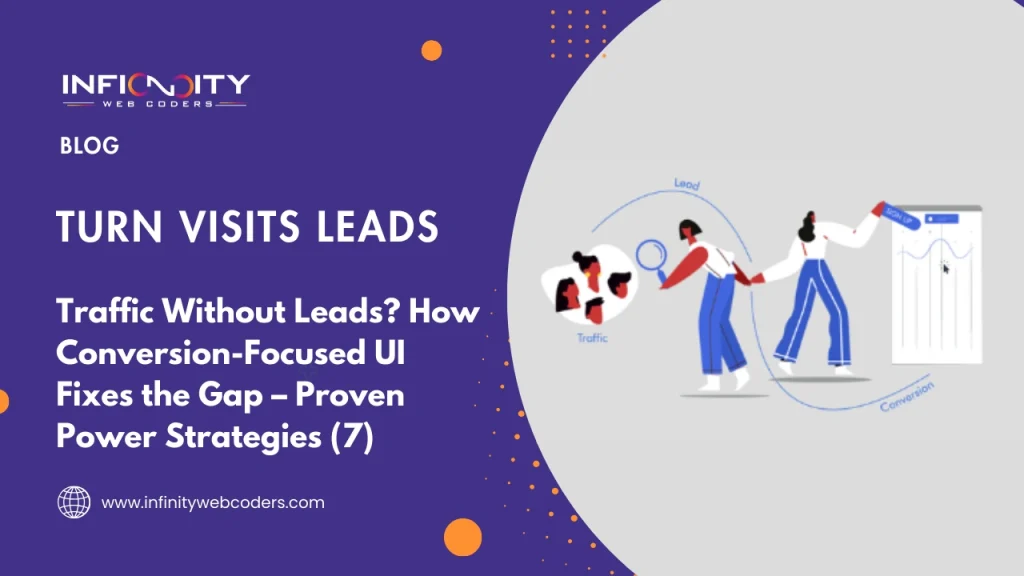
The Science Behind Conversion-Focused Web Design That Actually Generates Leads
If you’re seeing lots of traffic but few leads, the issue isn’t the visitors — it’s your conversion focused web design. Conversion-focused web design ensures that traffic turns into measurable actions by improving UI UX for conversions, optimizing the website lead funnel, and enhancing the overall user flow so visitors take the steps you want from landing page engagement to lead submission. When a site is intentionally designed for clarity, trust, and ease of use, conversions increase and wasted traffic becomes revenue. This article breaks down real-world strategies to bridge the gap between traffic and meaningful leads.
Why Traffic Alone Isn’t Enough
Traffic by itself doesn’t generate sales or leads. Websites often get “vanity traffic” — meaning users arrive but don’t interact with key business goals like subscribing, booking a call, or completing a form. This usually happens when the site lacks a conversion-focused web design, which aligns UI, UX, and visual cues toward clear user goals.
Research shows that users make judgments about usability and credibility within milliseconds — and a confusing or cluttered layout can drive them away before they engage deeply.
What Is Conversion-Focused Web Design?
Conversion-focused web design is about more than aesthetics: it’s about structuring your site to guide users toward specific actions. It uses user psychology, intuitive layouts, and frictionless experiences to help visitors move smoothly from visitor to lead to customer.
A well-executed conversion design:
- Reduces decision effort
- Guides users along a logical path
- Highlights critical actions
- Reduces anxiety and friction
These are core principles of UI UX for conversions, turning passive traffic into active leads.
Core Principles of UI UX for Conversions
High-converting websites often share foundational elements, such as:
- Intuitive navigation
- Simple paths to action
- Consistent design language
- Trust-building visual signals
Studies have shown that users are far more likely to return to a site with a seamless UX, while a poor UX increases bounce rates and lowers conversions.
Understanding the Website Lead Funnel
A website lead funnel describes the user journey from the point they first land on your site to when they submit a lead form or book a call. This usually involves:
- Awareness — user finds your site
- Understanding — user reads value propositions
- Consideration — user evaluates next steps
- Action — user fills a form or contacts you
Conversion design ensures each stage nudges users smoothly toward the next step.
Awareness to Action: How Users Flow
Understanding the psychological flow of a user helps design better interfaces. In good UX, users don’t have to think about where to click or why they should engage — the design itself guides them naturally toward conversion points. A lack of clarity or a break in this flow often causes users to bounce, wasting valuable traffic.
Improving User Flow to Capture Leads
Navigation Best Practices
A clear and logical navigation structure is fundamental. Users should know where they are and where to go next without effort. Intuitive menus, search functions, and logical page hierarchies reduce drop-offs and increase engagement — making it easier to move users into the lead funnel.
Best practices include:
- Simplified menus with clear labels
- Breadcrumbs for deeper sections
- Visible search for large content sites
The faster users find what they need, the more likely they are to remain on the site and convert.
Visual Hierarchy and Cognitive Load Reduction
Design clarity matters. Clutter and unnecessary visual noise increase cognitive load — meaning users spend more effort understanding your page rather than engaging with your content. Clean layout, whitespace, and purposeful visuals ensure that calls to action stand out, guiding users toward conversion—this is a key aspect of UI UX for conversions.
Clear Calls to Action That Drive Actions
Calls to action (CTAs) tell users what to do next — and their clarity directly affects conversion. Effective CTAs are:
- Prominent and visually distinct
- Action-oriented (e.g., “Book Free Consultation”)
- Placed strategically in the user flow
A/B testing different CTA color, copy, and position can reveal what drives the highest engagement — data-driven decisions that improve your funnel.
CTA Design and Placement Strategies
Your CTA should be:
- Above the fold on landing pages
- Present at critical interaction points
- Consistent in wording and intent
Use design contrast and white space to make CTAs stand out while keeping the flow intuitive.
Reducing Friction in Forms and Checkout
Forms are often the final step of your website lead funnel — and they can make or break conversions. Reducing friction at this stage is essential to drive conversions and ensure more visitors complete the action instead of abandoning the process.
- Asking only for essential information
- Using clear labels and helper text
- Offering autofill and smart defaults
Studies show simplified signup flows can increase conversions by significant percentages.
Simplifying Forms for Higher Conversions
Even minor form improvements — like reducing the number of fields or allowing guest submissions — can significantly improve form completion. Progressive profiling and optional fields also help users commit without feeling overwhelmed.
Trust Signals and Credibility Builders
Trust is a psychological driver for leads. Users want reassurance before giving personal information or purchasing. Trust signals include:
- Testimonials and reviews
- Security badges
- Transparent privacy policies
- Clear contact information
These signals reduce anxiety and boost confidence in your site — especially near lead forms or pricing pages.
The Role of Mobile UX in Lead Generation
Mobile users make up the majority of web traffic, and a weak mobile experience drives potential leads away. Mobile UX must include:
- Large, tappable CTAs
- Responsive layouts that adapt naturally
- Streamlined mobile forms
According to UX best practices, mobile optimization significantly affects user engagement and conversions.
Speed and Performance Impact on Conversions
Website speed is a fundamental UX factor. Slow pages frustrate users and increase drop-offs, directly hurting your conversion funnel. Improving load times through optimized images and efficient code reduces friction and improves your chances of converting visitors into leads.
A/B Testing and Data-Driven Optimization
Conversion improvements should be backed by data. A/B testing allows you to compare variations — such as CTA color, layout changes, or copy tweaks — and choose the most effective design based on real user behavior. Continuous iteration is essential for improving UI UX for conversions.
Case Studies: Real-World Conversion Results
Companies like Airbnb and Dropbox have significantly improved conversion rates through UI/UX improvements — simplifying interfaces, streamlining flows, and clarifying actions to increase leads and engagement.
These examples show that small, strategic UI/UX improvements can yield measurable conversion growth.
Conclusion
If you’re getting traffic without leads, it’s not about the number of visitors — it’s about how your site guides them. A conversion-focused web design removes friction, clarifies intent, and optimizes your website lead funnel with thoughtful UI UX for conversions. By improving navigation, enhancing trust, simplifying forms, and testing data-driven changes, you turn passive traffic into active leads.
Infinity Web Coders – Get Your Free Web Consultation Today.
Frequently Asked Questions (FAQs)
1. What is conversion-focused web design?
It’s the design approach that aligns UI and UX to guide users toward specific business goals like lead submission or purchases.
2. Why is UI UX for conversions important?
Because good UX reduces friction and confusion, making it easier for visitors to take action rather than abandon your site.
3. How does a website lead funnel work?
It’s the staged path users take from awareness to action, designed to move them closer to conversion through intentional design choices.
4. Can mobile UX affect leads?
Yes — poor mobile experiences are a leading cause of lost conversions since many users browse on smartphones.
5. What’s the fastest way to improve conversion flows?
Reviewing navigation and making CTAs unambiguous often yields quick gains because it clarifies user paths.
6. How often should I test design changes?
Continuous or periodic A/B testing ensures you keep improving based on user behavior and trends.
Start Your Conversion-Focused Web Design with Infinity Web Coders
